
Grid EMS (RMS)
Grid EMS System Monitoring & Controlling
Grid EMS (RMS)
Load monitoring for open access, coupled with grid monitoring at High Tension (HT) and Low Tension (LT) levels, is essential for maintaining a stable and efficient power distribution network.
Implementing daily alerts allows for real-time detection of anomalies and potential issues, ensuring prompt corrective actions to prevent disruptions.
Additionally, historical analysis provides valuable insights into consumption patterns and grid performance over time, enabling data-driven decision-making for optimizing load management and enhancing overall grid reliability.
This comprehensive approach ensures that power distribution is both effective and responsive to the dynamic demands of the grid.
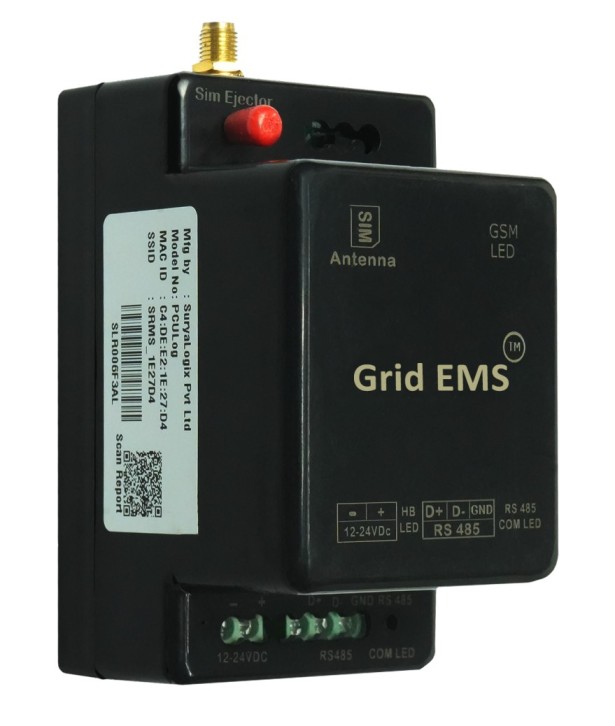
Why choose SuryaLogix Grid EMS ?
- Load monitoring for open access.
- Grid monitoring at HT / LT levels.
- Daily alerts & historical analysis.
Specifications & Features
- Load Monitoring for Open Access:
- Grid Monitoring at High Tension (HT) Levels
- Grid Monitoring at Low Tension (LT) Levels
- Daily Alerts
Frequently Asked Questions (FAQs) About Grid EMS
A Grid EMS monitors and controls energy flow between solar, BESS, and the grid. It helps optimize power flow and maintain grid stability.
RMS remotely monitors solar plant performance, equipment, and faults in real time. It provides centralized access to plant data and alerts.
RMS collects data from inverters, meters, and sensors and sends it to a monitoring platform. Operators can remotely track performance, faults, and alarms.
SCADA focuses on plant monitoring, visualization, alarms, and supervisory control. EMS additionally optimizes and controls energy flow between different power sources.
Yes, EMS can coordinate reactive power and power factor through compatible inverters and controllers. This helps meet plant and grid requirements.
EMS is more efficient because it provides continuous monitoring, automation, alerts, and energy optimization. Manual monitoring requires regular human intervention.
EMS communicates with inverters, BESS, meters, and controllers through industrial protocols. It coordinates power flow, battery charging, discharging, and energy control.
EMS coordinates with PPC for active power, reactive power, and power factor management. This helps solar plants meet applicable grid-control requirements.