
Soiling Station
Ensuring Data Quality with Real-Time Filtering for Maximum Accuracy
Sensors
Advanced Soiling Station
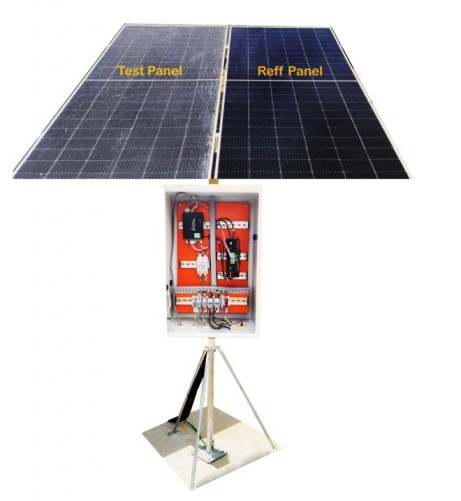
A Soiling Station for Solar Plants is an advanced monitoring system that measures the impact of dust, dirt, pollution, bird droppings, and other contaminants on solar PV modules. It compares a clean reference panel with a soiled test panel to calculate the Soiling Ratio (SR) and determine Solar Soiling Losses.
The SuryaLogix Soiling Monitoring System provides real-time monitoring to help solar plant owners, EPC companies, and O&M teams optimize cleaning schedules, improve plant performance, and maximize energy yield. It also supports both Dry & Wet Cleaning Methods for flexible maintenance.
Why Choose SuryaLogix Soiling Station?
The SuryaLogix Advanced Soiling Station is designed to deliver accurate and reliable Solar Plant Monitoring through intelligent data processing and advanced measurement techniques. The system supports both Short Circuit Current (Isc) and optional Maximum Power Point (MPP) methodologies for precise Solar Soiling Loss Calculation and performance analysis.
A key advantage of the solution is its Automatic Robotic Cleaning Integration, allowing robotic cleaning systems to operate based on actual soiling levels rather than fixed schedules. This helps reduce water consumption, minimize unnecessary cleaning activities, lower O&M costs, and improve overall plant efficiency. The system also supports both Dry & Wet Cleaning Methods, making it suitable for utility-scale and commercial solar projects.
Seamless integration with SCADA, RMS, EMS, and Weather Monitoring Systems (WMS) provides centralized monitoring, performance analytics, and actionable insights for enhanced Solar Asset Monitoring and optimized solar plant operations.
Specifications & Features
- Automatic Robotic Cleaning Integration
- Dry & Wet Cleaning Method Support
- Real-Time Solar Soiling Monitoring
- Accurate Solar Soiling Loss Calculation
- Continuous Soiling Ratio (SR) Monitoring
- Short Circuit (Isc) & Optional MPP Method Support
- IEC 61724 Methodology Compliance
- Temperature-Corrected Performance Analysis
- SCADA, RMS, EMS & WMS Integration
Frequently Asked Questions (FAQs) About Soiling Station
Soiling losses are reductions in PV energy generation caused by dust and contaminants accumulated on module surfaces. Monitoring these losses helps solar plant operators optimize cleaning schedules and maintain plant performance.
Yes. Dust on solar panels reduces the amount of solar radiation reaching the PV cells, which can lower power generation. The impact depends on dust accumulation, environmental conditions, and cleaning frequency.
Power loss due to soiling varies depending on location, weather, dust accumulation, and cleaning frequency. Continuous soiling monitoring helps quantify the actual impact of contamination on PV plant generation.
A soiling station compares the performance of clean and naturally soiled reference modules to determine the impact of contamination. SuryaLogix Soiling Station supports continuous monitoring of soiling and associated PV performance losses.
The soiling ratio is calculated by comparing the electrical performance of a soiled reference module with a clean reference module under similar conditions. A lower soiling ratio indicates a greater impact of soiling on PV performance.
A soiling monitoring system measures the impact of dust and dirt accumulation on PV module performance. SuryaLogix Soiling Station helps monitor soiling losses and supports data-driven cleaning and O&M decisions.
Dry cleaning removes loose dust without water, while wet cleaning uses water or suitable cleaning methods for more persistent contamination. The appropriate method depends on site conditions, soiling type, water availability, and module requirements.
A soiling station is a monitoring system used to measure PV performance losses caused by dust and other contaminants. SuryaLogix Soiling Station provides soiling data to help optimize cleaning schedules and improve solar plant O&M.