
DI/DO Extension Card
Tripping & Sensing of Breakers
Discover SuryaLog DI/Do Ext Card at REI Expo 2026
Explore its features, specifications,
and applications.
- 22 - 24
Oct 2026
Hall No 16 - Booth A143
India Expo Mart, Greater Noida
SuryaLog DI/DO Extension for Solar Power Plants
The SuryaLog DI/DO Extension for solar power plants is designed to extend digital input and digital output capabilities for monitoring and control applications, functioning as a comprehensive digital input output extension. Developed by SuryaLogix, the device supports the transmission and reception of digital signals and can be integrated with SCADA systems for centralized monitoring and control.
In solar power plants, SuryaLog DI/DO Extension can be used to sense ON, OFF, and TRIP conditions from breakers, helping plant operators monitor important equipment status signals through reliable digital input and output handling. The device supports RS-485 output and Modbus communication, enabling integration with compatible SCADA and monitoring systems.
SuryaLog DI/DO Extension is available with multiple channel options to suit different digital input and digital output monitoring and control requirements. Its hot-swappable and plug-and-play design supports convenient integration and replacement within compatible systems.
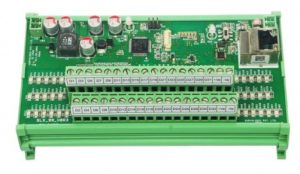
DI Extension Card
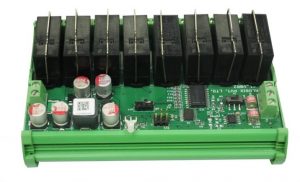
DO Extension Car
Why choose SuryaLogix DI/Do Extension?
- Digital signal management
- Breaker status monitoring
- SCADA integration
- Flexible channel options
- Convenient system integration
- Monitoring and control support
Specifications & Features
- Digital Input and Digital Output extension
- ON, OFF, and TRIP condition sensing
- RS-485 output for SCADA integration
- Modbus communication
- Hot-swappable operation
- Plug-and-play design
- 4/8/16 channel options
- Designed for monitoring and control applications
Frequently Asked Questions (FAQs) About DI/DO Extension.
DI stands for Digital Input, and DO stands for Digital Output. DI receives ON/OFF status signals from field devices, while DO sends ON/OFF commands to control connected equipment. In monitoring and automation systems, DI and DO are commonly used for equipment status monitoring and control.
A Digital Output (DO) is a discrete signal generated by a PLC, RTU, controller, or I/O module to control external equipment. It can be used for applications such as relay operation, alarms, indicators, contactors, and breaker commands.
A Digital Input Module receives discrete ON/OFF signals from field devices and makes their status available to a PLC, RTU, SCADA, or automation controller. It is commonly used for monitoring switches, alarms, relay contacts, and breaker status.
The main difference is their function and signal direction. Digital Input receives status signals from field devices, whereas Digital Output sends control commands to field devices. Simply, DI is mainly used for monitoring and DO for control.
A Digital Input detects discrete states such as ON/OFF or 1/0, while an Analog Input measures continuously varying signals. Common analog signals include 4–20 mA and 0–10 V, which can represent parameters such as temperature, pressure, irradiance, or other measured values.
Digital Inputs and Outputs are discrete signals used for equipment monitoring and control. Digital inputs receive status information from field devices, while digital outputs send commands from the controller to connected equipment.
A Digital Input (DI) is a discrete electrical input that represents two states, typically ON/OFF or 1/0. It is commonly used to monitor switches, alarms, relay contacts, breaker status, and other equipment conditions.
A Digital Output Module generates discrete control signals based on commands received from a PLC or controller. These outputs can be used to operate relays, contactors, alarms, indicators, breakers, and other field equipment.